Sunday, December 4, 2016

Past simple or continuous?

FORM

Most verbs form the past simple by adding the suffix -ed to the infinitive or root. However, there is an important group of verbs that do no follow the rule, therefore they are irregular and we must learn them by heart. Here is a quite complete list of over 200 irregular verbs, and here is a list of irregular verbs with their tanslation in Spanish.
Image

In the following presentation you can see how the simple past of regular verbs is formed, as well as the negative and interrogative forms of both regular and irregular verbs:


The past continuous is formed with the verb to be in the past and the -ing form of the verb we want to use. Let's see the forms in this presentation:


USAGE

The past simple is used to express completed actions in the past: We met our friends in the park.
The past simple is also used for actions that happened one after the other in the past: He came in, took off his coat and sat down.
The past continuous is used to express an action that was in progress at a certain time in tha past: She was having breakfast at 8 o'clock.
The past continuous is used to express two actions that were happening at the same time: Mary was cooking dinner while John was washing the dishes.Note that we use while to connect the two simultaneous actions.
Sometimes a longer action, expressed in past continuous, is interrupted by a shorter action, expressed in the past simple: I was having a bath when somebody knocked on the door.
The past continuous is used in stories to set the background: It was a lovely night. The stars were shining and they were walking hand ind hand when suddenly he kissed her.

In the following song by The Krystals we can hear many verbs in the past simple and some in the past continuous:


EXERCISES
Finally let's do some exercises to practise what we have learnt:

Sunday, November 27, 2016

Seven years old!

The fact that I haven't been wrting in this blog for a while, doesn't mean that I lost insterest or gave up blogging. It's simply that I have been quite busy with my other blog in Spanish and other things. For the past two years, I have been teaching beginners who couldn't understand grammar explanations in English. That's why I started a blog in Spanish called PrincipEnglish (English for Beginners, or "Principiantes" in Spanish). This year, however, I have a group of advanced students and that will surely make me write in this blog again.

As every year, to celebrate that my blog is a year older, I post a selection of the "Cartoon of the Week" section. They come from the usual sources: Wronghands, So much pun, Cartoon Movement and Brainless Tales, whose author, unfortunately, has stopped posting new cartoons on it. I'll miss it!


Thank you very much to all the readers. This scrumptious cake is for you!
Happy Birthday!
Image


Wednesday, January 6, 2016

Word formation: adverbs

In most languages new words can be created by adding suffixes and /or prefixes. This is called morphological derivation and it can help create new words of the same or different categories. For example, if you add the suffix -ly to an adjective you get an adverb: quick --> quickly.
Cheetahs run very quickly
Image

Today we are going to have a look at the affixes (suffixes or prefixes) that create adverbs.

The most productive suffix for adverbs is -ly, but there are others: -wards, -wise and -ways. Besides, there are also adverbs starting with the prefix: a- :

-ly
-ly is added to adjectives to create adverbs. Most adverbs just take ly, but there are certain spelling rules:
  • The -y ending after a consonant usually changes to i before the suffix: happy--> happily, easy-- easily. Exceptions are one-syllabled: shy--> shyly, sly-->slyly. Dry can have two spellings: dryly and drily.
  • The adjectives true, due and whole drop the final e: truly, duly, wholly.
  • Adjectives ending in -ple, -ble, -dle, -tle drop the silent e and take a y: simple--> simply, probable--> probably, idle--> idly, gentle--> gently.
  • Adjectives ending in -ic add -al before -ly: fantastic--> fantastically. Exception: public--> publicly.
  • Adjectives already ending in -ly such as lovely, friendly, silly, lively, jolly, heavenly, leisurely... do not take the -ly sufix. In fact, they do not change into adverbs, but an adverbial phrase is used instead: He greeted me in a friendly manner. He is behaving in a silly way.
Adverb Wordle
Image

Same form as adjectives
  • Some adjectives are used as adverbs with no change of spelling: fast, straight, hard...: That´s a fast car (adjective). He drives very fast (adverb). It's hard work (adjective). He works hard (adverb).
  • Some adjectives ending in -ly that are related to time are also used as adverbs: weekly, hourly, daily, monthly... remain unchanged: A daily newspaper (adjective) He comes here daily (adverb).
  • A few adjectives ending in -ly remain the same as adverbs: deathly, only, bodily, masterly. He is an only child (adjective). I've seen him only once (adverb).
-wards or -ward
  • This suffix can end in s or not. Generally, -wards is used in British English, while -ward is preferred in America. However, some of these words ending in this suffix can also act like adjectives, in which case, they always end in -ward: Let's go forward(s) (adverb). The forward movement of History (adjective). When forward is used in phrasal verbs, it never ends in s: I look forward to hearing from you. The meeting has been brought forward to this Friday.
  • -wards is usually added to prepositions or nouns to give the idea of direction: upwards, downwards, forwards, backwards, inwards, onwards, outwards, eastwards,southwards, seawards... The back garden faces seawards so you can always have a pleasant view. 
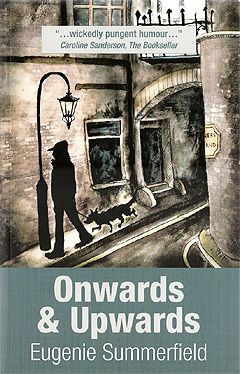
Onwards and upwards by Eugene Summerfield
Image

-wise
  • The suffix -wise is usually added to nouns to form adverbs and adjectives. It gives the meaning of "in the manner of" or "in the direction of": clockwise, anticlockwise = counterclockwise, likewise, lengthwise, crabwise, contrariwise, otherwise,... It can also mean "concerning": Things aren't too good businesswise (i.e. concerning the business)
-ways
  • This suffix also means "in the direction of": edgeways, sideways, lengthways, breadthways...  Do not confuse it with the compounds of the noun way (meaning "road"), such as carriageway, causeway, highway, railway... When in doubt, bear in mind that such compounds can be used in the singular as well as the plural, whereas the adverbs always end in s.
a-

  • We shouldn't confuse this prefix with the prefix a- of Greek origin that means "not", as in apolitical, amoral, asexual.... In this case, the prefix a- which forms adverbs comes from Old or Middle English and is no longer productive, so no more words are being created with it. Usually added to addjectives or nouns, it gives the meaning of location: "on", "in"; afoot, abed, abroad, along, aloud, around, ahead... Sometimes it means "of": anew, akin
Compound adverbs
There are quite a few adverbs that are formed by combining here, there and where with various prepositions, all of which are old-fashioned and mainly used in formal language. Here are some of them:
  • Here- compounds: hereabout, hereafter, hereby, herein, hreof, hereto, herewith, etc.
  • There- compounds: thereabout, thereafter, thereby, therefrom, therein, thereupon, therefore, etc. The latter is the only one of these which is still widely used.
  • Where- compounds: whereat, whereby, wherefore, whereof, whereon, whereupon, wherewith, etc.

Exercises:
For more information on adverbs and their position in the sentence, visit Lola Dominguez's blog.

The logical song by Supertramp is full of adjectives, but among them are a few adverbs. Can you spot them?

Tuesday, December 8, 2015

Idioms with people's names

There are quite a few idioms and proverbs that use proper nouns, which are words that name specific persons, places or things and are always written in capital letters. Today, we are going to have a look at some idioms that use names of people:
  • Every Tom, Dick and Harry means everybody, every ordinary person: If you tell Louisa, soon every Tom, Dick and Harry will know about it.
  • Jack of all trades, master of none is a proverb used for people who are competent with many skills but are not especially good at any of them. As is usual with proverbs, the second part can be left out. There's a chap in the office who can do almost anything; he's a jack of all trades.
  • All work and no play makes Jack a dull boy is a familiar proverb that means that if a person does not take some time off work, they can become boring. It was the phrase that Jack Nicholson kept typing in The Shining, a film based in the novel of the same name by Stephen King.
    Image
  • Johnny-come-lately means a newcomer, someone who has just joined a group. She may be a Johnny-come-lately in the office, but she´s doing really well. There's a song by Eagles in which this expression can be heard. You can find it at the end of this entry.
  • Keep up with the Joneses means to try to be as good as the neighbours by getting what they have and matching their lifestyle: Her neighbour bought a new car and she went out and bought another; she's always trying to keep up with the Joneses.
  • Rob Peter to pay Paul is to take or borrow money from someone in order to pay a debt to another person. If you take money from a credit card to pay off another, it's a case of robbing Peter to pay Paul. It won't take you anywhere
  • John Hancock is a person's signature. It refers to one of the signers of the Declaration of Independence of the USA. Put your John Hancock on the dotted line, please.
  • A peeping Tom is a voyeur, a person who takes pleasure from secretly watching others. By way of example you can watch the video below, which is an excerpt from the legendary film "Back to the Future".
  • To live / lead the life of Riley is to live a really good life with few problems. Stop complaining. You're living the life of Riley. The origin of this idiom is in an old Irish song called "Is that Mr. Riley?"
  • (And) Bob's your uncle is used after explaining a simple set of instructions, meaning that it's very easy to do: Boil the pasta, drain it, put the sauce on top and Bob's your uncle! 
  • Take the Mickey (out of someone) is to make fun of someone. This expression, used mainly in Britain, comes from the Cockney Rhyming slang "Mickey Bliss", meaning "piss", because the orignal expression was take the piss out of someone. It is also equivalent to pull someone's leg, which is also used in America. Are you being serious or are you taking the Mickey out of me? 
  • The real McCoy is the genuine thing or person. This isn't an imitation. It's the real McCoy.
  • We are even Steven is an expression used when someone has repaid a debt. It's clear that this name has been used because it rhymes with "even". Now that you have given me back the money I lent you, we are even Steven.
  • John Doe or Jane Doe are names used for a man or a woman whose real name is unknown. 
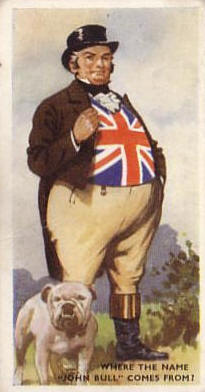
  • John Bull is a character who represents the typical English man. He is usually pictured as a stocky figure wearing a waistcoat with the British flag on.
  • Uncle Sam is the government of the United States and, by extension, the American people. The name is an expansion of the abbreviation U.S.


 Johnny-come-lately by Eagles. At the beginning of the video there's a grammar mistake. Can you spot it?


Jack of all trades by Bruce Springsteen


Exercises:
Finally, try to complete the idioms in this presentation:

Friday, December 4, 2015

Six years old!

This blog is six years old!
Image

I'd like to thank all my readers for the million visits this blog has had since I started writing, back in November 2009. This cake is for you!

And, as usual, I'm adding a selection of the cartoons of the week that I post every Sunday. They come from my usual sources: Wrong Hands, So much pun, Brainless tales and Cartoon Movement. They deal mainly with puns, but some of them are related to current affairs such as the terrible attacks in Paris. I hope you like them and I hope you keep reading this blog! Cheers!

Sunday, November 8, 2015

Indian summer

Today is the 8th of November. It's autumn and yet the weather is mild: it's sunny and warm (about 24º C), there's no wind... It's not the weather you might expect in autumn. That's what is called an Indian Summer, a term that, originated in the USA and Canada, is becoming more widely used in the UK, where this spell of good weather in the middle of the autumn is known as "All Hallows summer" or "St. Martin's summer" (In Spain we say "Veranillo de San Martín") because it hapens around the Day of St Martin, that is, the 11th of November. So, if it's got a name, it's not so strange to get warm days in November, is it?
Indian summer
Image

But where does this expression come from? It was first used in North America around the 1770s, but the origin is not certain. Some say that it was the Indians that pointed it out to the European settlers. Others say that during this spell of good weather the Indians renewed their attacks on the settlers. Whatever its origin, the expression is here to stay and it's already in use in other English speaking countries apart from North America.

Indian summer is the title of a song, a film, a festival,..
Image

By extension, it also means a pleasant period of someone's life, especially when they are older:
  • After marrying his new wife at the age of 59, he entered into the Indian summer of his life. 
  • She is in the Indian summer of her career.

Apart from Indian summer, there are other proverbs and idioms related to the seasons and the weather. Here are a few:
  • One swallow does not make a summer, meaning that because one good thing has happened does not mean that others will follow:  Her latest book was a success, but a swallow does not make a summer. She still has to prove that she is a good writer.
  • To buy straw hats in winter is mainly used in the stock market and it means to buy when demand and prices are low in order to sell when the prices are higher so as to make big profit.
  • In the dead of winter means in the middle of winter, when it is the coldest:  In the dead of winter, just when it was colder, she came out wearing just a skimpy dress and no coat on. 
  • No spring chicken is used to refer to people who are no longer young: Stop doing that. You're no spring chicken!
  • To be full of the joys of spring is to be very happy. Look at him, he's full of the joys of spring.
  • Autumn years are the later years of a person, especially after retirement: In the autumn years of his life he took up painting.
  • Make hay while the sun shines means to make the most of opportunities when they come: Now that the children are at school, I'll set to work in my book. I'll make hay while the sun shines.
  • To be / feel under the weather is not to feel well: I won't go out today. I'm feeling a bit under the weather.
  • It's an ill wind that blows nobody any good. This proverb means that even the worst events can be beneficial for someone: After the fire in the building, many workers were given jobs to repair it. It's an ill wind that blows nobody any good.
  • Come rain or come shine / rain or shine: no matter what the weather is like, in any case: After a long week working in the office we'll go out at the weekend come rain or come shine.
The following presentation can help you remember these idioms. Try to complete them and then remember their meaning. 


In this song by Stereophonics you can hear the expression Indian summer:


In this other song, Frank Sinatra says that he is going to love his sweetheart come rain or come shine; that is, in any case, no matter what life brings about. Enjoy it!

Sunday, October 18, 2015

Suggest and recommend

My students usually make mistakes when using these two verbs.
A typical mistake:
* I suggest you to buy a new car.

The verb suggest cannot be followed by the infinitive. It can be followed by the gerund or a that-clause. Let's see:

I suggest buying a new car.
I suggest that you buy a new car.
I suggest buying a new car
Image

In the first sentence the suggestion is good for the person who suggests or a group of which they form part.
However, in the second sentence, the suggestion is meant for another person, not for the speaker.
In the second sentence, the verb buy is in fact in the subjunctive mode, which uses the same forms of the indicative, except for the third person singular, which doesn't take the final "s":
I suggest that he buy a new car.
The subjunctive form of the verb to be is be for all the persons or were if it is in the past:
I suggest that she be here as soon as possible.
I suggested that she were here as soon as possible.

In British English, the sentence using the subjunctive can more commonly be expressed:
 I suggest that you should buy a new car.
As you can see, the modal verb should is used instead of the subjunctive. Another thing to take into account is that the word that can be left out in this type of sentences:
I suggest you buy a new car.
I suggest you should buy a new car.

After suggest you can also use just a noun or noun phrase:
A: "Which dress should I wear?"
B: "I suggest the black one"
I suggest the black dress
Image

For the use of suggest in indirect speech, have a look at this blogpost.

As for recommend, it cannot be used with the infinitive either. It can either be followed by the gerund or a that-clause:
I recommend reading that book.
I recommend that you read that book.
In the latter sentence, read is a subjunctive.
I recommend this book
Image

You can also use a noun after recommend:
I recommend this book to you.
However, you cannot use the indirect object next to the verb, so, these sentences wouldn't be correct:
*I recommend to you this book.
*I recommend you this book.

So, to put it in a nutshell, both verbs are never followed by the infinitive. Instead, they are followed by:
  • A noun or noun phrase
  • A gerund
  • A that-clause + subjunctive
  • A that-clause + should + infinitive

In the following video you can hear an example of suggest. At one point, the lady says: " I suggest you just go away". Can you hear it?

Finally, let's do some exercises:
Suggest and recommend

Thursday, July 2, 2015

Vocabulary: crime and punishment

Today we are going to have a look at the vocabulary related to justice: crimes, criminals and how they are punished.
Image

First of all, this Prezi presentation will show us the most important terms and then we'll look into the ones that need further explanation.


As you can see, many names of criminals derive from the crime words, or the other way around. There are also verbs associated with them:
CRIME CRIMINAL VERB
burglary burglar burgle
robbery robber rob
murder murderer murder
mugging mugger mug
kidnapping kidnapper kidnap
smuggling smuggler smuggle
bribery briber bribe
shoplifting shoplifter shoplift
pickpocketing pickpocket pickpocket
forgery forger forge

For the difference between rob and steal, have a look at this blog post.

Murderer and killer both mean "someone who deliberately kills a person". A serial killer (but not *serial murderer) is someone who has killed a number of people over a period of time, usually in the same fashion. An assassin, on the other hand, is someone who kills an important or famous person for money or political reasons.

In the next 80s song by Bananarama we can hear a few expressions related to the topic we are dealing with today.


Finally, let's do some exercises:

Sunday, February 1, 2015

I wish / If only

We use wish and if only to express how we would like things to be different if we had the power to change them. They both have the same meaning, but if only is more emphatic.
They can be followed by another clause using the following tenses:
  • Past simple. It's used to express things you would like to be different in the present, but which you deem impossible or unlikely: I wish I were taller. As in conditional sentences, we use the subjunctive (were) for all the grammatical persons. However, was is also possible in a less formal context: I wish he was my friend.
I wish I were taller
Image

  • Past perfect. It's used to express regret or criticism about things that happened or didn't happen in the past. I wish I had studied harder for the exam. (Now it's too late. I can only regret I didn't study more). I wish you had told me the truth.
Image

  • Would + infinitive. It's used to:
    •  Complain about things that you find annoying. I wish you would stop making so much noise. If only this wind would stop. In these sentences, the subject of the subordinate clause must be different from that of the main clause. 
    •  Express wishes for the future when we think the action will probably not happen  (could can be used instead of would) I wish I could go on holday with you, (but I know I can't). If there is a stronger possibility that the action will happen, we use hope: I hope I can go on holiday with you. (I don't know if I can or not). 
          We can find another example of wish + would in this song by Phil Collins:


There are many songs in which you can find examples of  wish or if only. Here are a few:


Tuesday, January 13, 2015

The verbs of the senses

A typical mistake my students make:
*You look well.
*I feel well.
The use of "well" in these sentences is incorrect because look and feel, as verbs of the senses, should be followed by adjectives, not by adverbs. Instead, the sentences should be: You look good / I feel fine. Let's see how these verbs work.
Image

We have five senses: sight, hearing, taste, touch and smell. (Some people talk about a sixth sense, which is in fact extrasensory perception). But today we are going to deal with the verbs of the senses. Here are the most important:
sense
verb
sight see, look
hearing hear, listen, sound
taste taste
touch feel
smell smell

Are these verbs followed by adjectives or by adverbs?
Some of these verbs can be used either as action verbs or stative verbs. In the former case, they are followed by adverbs, but in the latter case, they are followed by adjectives, because we are describing the subject rather than the action of the verb. Compare these sentences:
- She looked at him angrily.
- She looked angry.
In the first sentence, look is an action verb, so, it is complemented by an adverb: "angrily" describes the way that she looked at him. However, in the second sentence look is a stative (or state) verb meaning "seem" or "appear", and the adjective "angry" does not refer to the verb but to the subject. It is similar to saying that "she is angry". As you can see, the second sentence does not describe an action but a state. Going back to the sentences at the beginning, do the verbs show action or state? That's right! There's no action implied, so, they must be followed by adjectives.
In this page you can see many examples of state vs. action verbs.
She looks angry
Image
Can they be put in continuous (progressive) tenses?
Sense verbs can involve involuntary perception like hear or see, or voluntary perception, like look or listen.
Involuntary perception verbs cannot be put in continuous tenses: *I'm seeing the ocean from my window. Instead, we use can or could with them: I can see the ocean from my window.
On the other hand, voluntary perception verbs can be used in continuous tenses: What are you listening to?
However, see and hear can also be action verbs and can have different meanings to that of perception, in which case they can be put in continuous tenses: see can mean "meet someone": I'm seeing Mary for lunch. Hear can also mean "to listen to and judge a case in court": The judge will be hearing the evidence today.
Feel, taste and smell do not have different forms for voluntary or involuntary perception, so, they can only be put in continuous tenses when they are voluntary:
- What are you smelling?
- The cook is tasting the soup.
- I'm feeling the material to see if it is soft enough.
Whereas for involuntary actions, they can never be used in continuous tenses:
- This smells awful.
- My mum's food tastes delicious.
- This blanket feels so soft!
The cook is tasting the soup
Image

The verbs of the senses can be used with like, as if and as though.
She looks like her mum. (noun)
She looks as if / as though she is tired. (clause)
To see the difference and more examples have a look at this entry.
In the following video you can hear the great James Brown giving us some examples of feel followed by adjectives (I feel good / I feel nice) and also by like + noun  (I feel like sugar and spice)


See and hear can be followed by verbs in gerund or infinitive with a slight change in meaning, as we saw in this blogpost.

Finally, let's check what we have learnt by doing this exercise.

Wednesday, December 31, 2014

New Year celebrations

Today is the last day of the year and millions of people will be celebrating the arrival of the new year in many parts of the world. However, it will not be new year for everybody: the Jewish, the Muslims, the Chinese... even orthodox christian countries follow a different calendar.
Wherever January 1st is New Year, celebrations typically include big parties, fireworks and champagne. But there are many variations. Today, we are going to see what people in Britain do when the clock strikes midnight on December 31st.
Image
After a special, copious dinner (at home or out) people get ready for the countdown. Many wear party hats and masks and blow noise makers. Some people go out to see the fireworks display while others prefer to watch them on television.

The fireworks in London are so impressive and so many people want to see them live that the authorities have decided to play it safe by restricting the audience. So, this year, if you want to see the fireworks live you have to pay 10 pounds, and you wouldn't believe it but all the tickets have sold out! If you want to see how impressive this display is, have a look at this video:


When the clock strikes twelve, people kiss each other, then make a circle and join hands as they start singing Auld Lang Syne, which is a traditional Scottish song that has become the hymn for New Year's Eve because it symbolises endings and new beginnings. The lyrics was written by the poet Robert burns in 1788, but the music is much older and its author unknown. The song is written in Scots, a dialect of English spoken in Scotland, that's why it's difficult to understand.
Singing Auld Lang Syne
Image
In the following video you can read the original lyrics and a translation into modern English:


And talking about Scotland, the New Year celebrations there are called Hogmanay, and they stretch for two or three days. For the Scots, it's as important as Christmas. Hogmanay, whose roots go back to the old celebrations of the winter solstice before christianity reached these lands, is celebrated in different ways in each city or town of the country. In the following video we can see how they celebrate it in the capital, Edinburgh.


It goes without saying that after Auld Lang Syne, the music, dancing and champagne (or Cava) drinking goes on for hours till the early morning when you can see groups of people going back home to sleep it off.
And, like Ella Fitzgerald, I'll ask you: "What are you doing New Year's Eve?"


Happy New Year!

Image

Tuesday, November 25, 2014

Five years old!

Incredible but true! It's five years since I started this blog, and though I don't write entries as often as I used to, it's not because I've run out of ideas or topics to write about, but because I'm so busy!
Anyway, let's celebrate this fifth anniversary by having a look at the "cartoons of the week" I have posted over the last 52 weeks, with the exception of the summer months, when I don't always have access to the internet.

This year, I have come across a great blog in which I can find the type of cartoon I like (generally puns): Brainless Tales. Apart from this, I keep on using my usual sources: Wronghands, So much pun, etc. But, as you can see, not only puns have been used. There are also some cartoons that have to do with important current issues like the situation in Ukraine or the landing of Philae on Comet 67P. I hope you find them interesting!


Finally, I'd like to thank all the readers of this blog and the people who are so kind as to leave their comments. Thank you!
Image

Monday, October 20, 2014

The names of the months

Sometimes I hear people complain about the uselessness of learning Latin. "It's a dead language", they say, "Nobody speaks it any more"... While it's true that it has stopped being the lingua franca, that is, the language in which people from different parts of the world were able to communicate, it's a matter of fact that the Western World is hugely indebted to the culture and language of the Romans, for so much of our own culture derives from it.
Latin is not dead
Image

The calendar is a feature that reminds us of how indebted we are to the Romans. To begin with, the very word calendar comes from Kalenda, which was the first day of the month in Latin.

The old Roman calendar used to have ten months and the priests had to add some days at the end so that it kept with the solar year. Later, King Numa changed it to a 12 month year, adding January and February, which became the last months of the year.

Let's have a look at the names of the months in Latin:
  •  March. The Romans started the year with the month of Martius, devoted to Mars, the God of war. It was in this month when soldiers started their training.
  • April. Aprilis was devoted to the goddess Venus, and although it is uncertain where the name comes from, the Romans thought it came from aprire, which means to open.
  • May (Maius) derives its name from the goddess Maia, to whom a sow (female pig) was sacrificed on the first day of the month. Maia, mother of Mercury, was an earth goddess who promoted growth.
  • June. The month of Junius is devoted to Juno, Jupiter's wife and mother of several gods and goddesses.
  • July was originally called Quintilis, because it was the fifth month. (Remember that the year started in March). However, following Julius Caesar's death, it was called after him. 
  • August was originally Sextillis, that is the sixth month. Later, they changed its name for that of Octavius Augustus, the first Roman Emperor.
  • September is called so because it was originally the seventh month. Septem means "seven".
  • October used to be the eighth month. Octo is eight.
  • November comes from nove, or ninth month.
  • December was the tenth month, as decem means "ten".
  • January was named in honour of the god Janus, the deity related to beginnings and ends. He has two faces, one looking to the past, the other to the future.
  • February was the month of the purification rituals caled Februa, which used to be carried out in the middle of this month.

Janus
Image

Some time in the second century BC, the order of the months was changed, and January became the first month and February the second, and so those months that had been named after ordinal numbers bore no relation to their original meanings any more.

It was Julius Caesar who, influenced by the Egyptian calendar, decided to make a new calendar that syncronized with the solar year. He decided that all twelve months should have 30 or 31 days, except February, which should have 29 and add one day once every four years, making it 30. However, when Octavius Augustus died and the month Sextilis was named after him, the Senate decided to add one day to this month, so that it had as many days as Julius's month, and they took this day from February, leaving it with just 28 days.
Julius caesar
Image

Ceasar's calendar had to be reformed in the 16th Century by Pope Gregory XIII. The astrologists acknowledged that the spring equinox was happening on the 11th of March when it had to happen on the 21st, so they realized that there must be a mistake: the Julian calendar added one day every four years, believing that it took the earth 365.25 days to go around the sun, when in fact, it takes ten minutes less, 365.242, to be exact. A reformation was needed, so they decided to take action and shorten the year 1582 in ten days, and reduce the number of leap years so that those ending in 00 wouldn't be leap years any more, with the exception of those which are divisible by 400. So, the year 1900 was not a leap year, but 2000 was one.
Pope Gregory XIII
Image

This reform was immediately accepted in all the Catholic countries, but not in Protestant, Orthodox or Anglican countries. In Britain and its colonies it was adopted in the year 1752. That's why, although they say that Cervantes and Shakespeare died on the same day (23rd of April, 1616), this is not true, because the latter died ten days later, on May 5th, according to the Gregorian calendar.

The Gregorian calendar is not perfect, as it seems that it will have to be reformed by the year 3300. But, who is going to witness that day? And who's gonna care? 

Now do this quiz to see how much you have learnt:

Thursday, May 1, 2014

In, on or at the corner?

According to the dictionary, a corner is "a point where two converging lines meet, forming an angle, either external or internal". (In Spanish we have two words for this: the internal angle is called rincón, whereas the external one is esquina).

Which preposition goes with corner: in, on or at? The answer is the three o them can precede this word. However, the three expressions have different meanings:
  • When corner means an interior angle formed by two meeting walls, we use the preposition in. A piano was in the corner of the room. 


Hover your cursor over the Image
In the corner

  • On the corner means "occupying the surface". For example, the shop in the picture is on the corner of the street. You can also say that a person is standing on the corner because they are occupying a space.


Image by Jackie Bird 
On the corner
  • At the corner means near or adjacent to a corner.  For example, you can say "Let's meet at the corner of my street". But you can also say that the shop is at the corner of High Street and Station Road, that is, when you give the name of the two streets that intersect each other, at is used instead of on because you don't refer to the surface but the point of intersection.
Here's a tip that can help you remember this: in is used with the idea of being inside a volume; on when there is an idea of surface, and at when we just mean a point or being near something.

Another preposition that can be used with corner is around.  He went around the corner, which literally means that he turned around the corner. However, this can  also have an idiomatic meaning (see below).

Other expressions with corner:
  • Out of the corner of the eye: you see something but not clearly, because you see it sideways rather than directly. He saw something move out of the corner of his eye.
  • Blind corner: a street corner that you cannot see around as you are driving. Never overtake on a blind corner!
  • Corner shop: small local store. I'll pop in the corner shop to get some milk.
  • Just / right around the corner: very near either in space or in time: Exams are just around the corner. My boyfriend lives just around the corner.
  • The four corners of the earth /world: many different parts of the world. People from the four corners of the world gathered for the event.
  • A tight corner: a dangerous or awkward position from which escape is difficult: His lying got him into a tight corner.
Spring is just around the corner!
Image
How about an exercise to see how much you can remember?


In the following song by "The Script", a man is waiting for his lover on the corner of a street. He says he's not moving, he's going to stand his ground until she realizes that she is missing him and so goes to the corner where they first met. Isn't it romantic? 

Wednesday, April 9, 2014

Traditional Easter food in Britain

Chocolate eggs are undoubtedly the most popular Easter food in Britain, but by no means the only one. Hot cross buns, roast lamb, Easter biscuits in the shape of bunnies and Simnel cake are not to be sniffed at. Today, we are going to have a look at some of these traditional recipes.
Egg hunt
Image by Simon Greig in Flickr

As we said in a previous post, eggs have traditionally been related to spring and the beginning of life, and from the early stages of Christianity, they symbolized the resurrection of Jesus Christ after his death on the cross. Today, boiled eggs are still eaten at Easter, but the chocolate egg has become the most popular in the last years, being the traditional present that people give away to family and friends.
In the following video, we can hear a short history of the Easter egg.


Apart from boiled eggs, Easter biscuits are eaten for breakfast and also for tea. They are traditionally made with currants and spices, but they can also be made with other ingredients and in the shape of eggs or bunnies. Here is a recipe for traditional Easter biscuits.
Easter biscuits
Image
For the main meal on Easter Sunday, roast lamb is served with mint sauce and vegetables. Lamb symbolizes Christ, who is known as "the Lamb of God". But before the Christians, lamb was already used by the Jews to celebrate Passover, which roughly coincides with Easter. It all started more than 3000 years ago, when the Jews were slaves in Egypt and Moses wanted to free them. The Pharaoh refused to let them go, so God sent a series of plagues, the last one of which was the death of the firstborn sons. To spare the Jewish children, God told them to sacrifice a lamb and paint the lintels of their doors with its blood, so that the angel of death would pass over their houses and leave their offspring unhurt. That's why the Jews call this festivity "Pesach", or "Passover". When Jesus entered Jerusalem he told his Apostles to prepare the Passover meal, and they probably ate lamb at the Last Supper.
Easter roast lamb
Image


For tea, in many households people like to make Simnel cake, which is a delicious fruit cake with layers of marzipan and decorated with eleven marzipan balls which symbolize the twelve Apostles except Judas, who gave Jesus away. In this video we can watch how to make one of these.


And last but not least, my favourite: the scrumptious hot cross buns, which are served hot with butter. They are traditionally eaten on Good Friday, but I start to eat them as soon as I see them in the shops, which can be as early as February! You can watch how they are made in this video.
One a penny, two a penny, hot cross buns!
Image
Finally, try this exercise to see how much you have learnt.
Traditional Easter food

Happy Easter!


Thursday, March 27, 2014

Reporting verbs

Apart from say and tell, there are other verbs that can introduce sentences in reported speech, as we saw in another blog entry. These reporting verbs are more specific: they tell us more about the intention of the speaker. Let's see an example:
Bart said: "I won't do it again, dad".
This sentence can be reported as:
1. Bart told his dad that he wouldn't do it again.
2. Bart promised his dad not to do it again.
Both reported speech sentences are correct, but the second one is better because the verb "promise" tells us a lot about the intention of the speaker, whereas "tell" is more neutral.
Bart promised his dad not to do it again.
There are many reporting verbs, which are difficult to master even for native speakers, but when used, they undoubtedly give a greater quality to their writing.
In order to make them easier to learn for foreign speakers of English, we are going to classify them in five different groups according to the structure or pattern they follow. Bear in mind that some of them can be found in two or even three groups:

Verb + to-infinitive
"I'll bring some refreshments", she said.
She offered to bring some refreshments.
These are some of the verbs that have this pattern
agree decide offer
promise refuse threaten
claim swear demand

Verb + object + to-infinitive
"Please, stay!", she said.
She begged me to stay. Note that there is no need to repeat the word "please", because its meaning is given by the reporting verb "beg".
Some verbs that follow this pattern are:
advise ask convince
encourage invite beg
forbid instruct order
request remind urge
persuade warn

Verb + V-ing / noun
"I didn't steal the money", he said
He denied stealing the money.
Some verbs that require a gerund are:
admit confess acknowledge
advise deny recommend
regret suggest

Verb + Preposition + V-ing / noun
Prepositions are always followed by nouns or gerunds, so it's easy to remember that these verbs with prepositions will be followed by the -ing form. Note that you can have an object either between verb and preposition or right after the preposition.
"Yes, you stole the money" she said.
She accused him of stealing the money.
"I'm sorry I'm late!", she said.
She apologised for being late.

Verb + Prep. + V-ing Verb + Object + Prep. + V-ing
apologise for accuse s.o. of
insist on blame s.o. for
confess to congratulate s.o. on
complain about forgive s.o. for
warn s.o. against / about
disuade s.o. from

Verb + that + Subject + Verb
This structure is more formal, so it is more commonly used in written English. The verb in the subordinate clause is in the subjunctive, but in British English it is more usual to use should and the infinitive instead of the subjunctive. Examples:
"Let's go shopping", he said.
He suggested that they go shopping.
He suggested that they should go shopping
He suggested going shopping. (This is less formal, as we have already seen, but much more common.)
These are some of the reporting verbs followed by a subordinate clause:
agree ask claim
demand decide guarantee
promise propose recommend
request swear suggest

One example of one of the above patterns can be found in the following song by KWS, in which we can hear the expression "I'm begging you to stay", which is another way of saying "Please, don't go". Enjoy!


Exercises:

Related Posts Plugin for WordPress, Blogger...